
La Orotava: The Historic & Cultural Soul of Northern Tenerife
While most visitors to Tenerife never leave the sun lounger, those «in the know» head North to La Orotava. Nestled in a lush valley with the ever-present silhouette of Mount Teide above, this isn’t just a town—it’s a living museum of 17th-century Spanish architecture, secret gardens, and authentic Canarian soul. Best of all, it is located just a 10-minute drive from the iconic Puerto de la Cruz, making it the perfect cultural escape for those staying in the North or a panoramic day trip for those coming from the South.
If you’re looking for a break from the «all-inclusive» bubble and want to see the real Tenerife, La Orotava is your non-negotiable next stop.
🏛️ Why La Orotava is a «Must-Visit» on Your Itinerary
When you book through our links, there is absolutely no extra cost to you. We earn a small commission from our travel partners, which helps us maintain and improve our guides.
La Orotava is the architectural jewel of the Canary Islands. Its steep, cobblestone streets are lined with noble mansions and grand churches that haven’t changed in centuries. It offers a cooler, fresher climate and a level of sophistication you won’t find in the southern resorts.
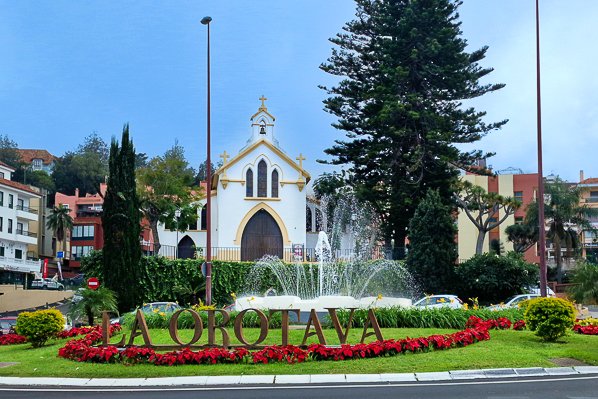
💡 Expert Tip: La Orotava is best explored on foot, but be prepared—the streets are steep! Wear comfortable shoes and keep your camera ready for the famous wooden balconies.
🚶♂️ Top Things to See in the Historic Centre
To make the most of your day trip, we’ve curated the «Golden Route» of La Orotava’s most iconic landmarks.
La Casa de los Balcones (The House of the Balconies)
The most photographed building in town, and for good reason. This 1632 mansion is a masterclass in traditional Canarian woodwork.
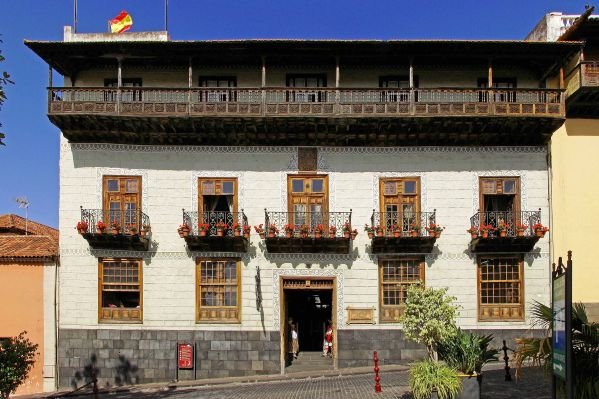
The Highlight: The interior courtyard is an oasis of peace, and the intricate pine balconies are breathtaking.
Don’t Miss: The museum inside, which shows how the island’s elite lived 300 years ago.
The Victoria Gardens (Jardines del Marquesado de la Quinta Roja)
These tiered, French-style gardens offer the best panoramic views in Northern Tenerife.
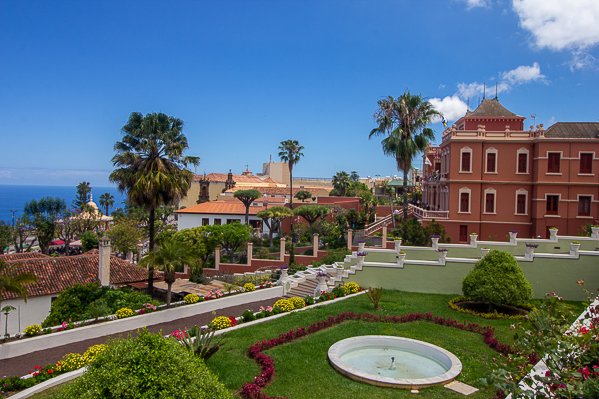
Why go: It’s free to enter and provides a stunning backdrop of the valley and the Atlantic Ocean.
Liceo de Taoro: The Pink Palace on the Hill
Located right next to the Victoria Gardens, this striking pink mansion is impossible to miss. Originally a private social club for the town’s aristocracy, the Liceo de Taoro remains one of the most prestigious cultural societies in Tenerife.
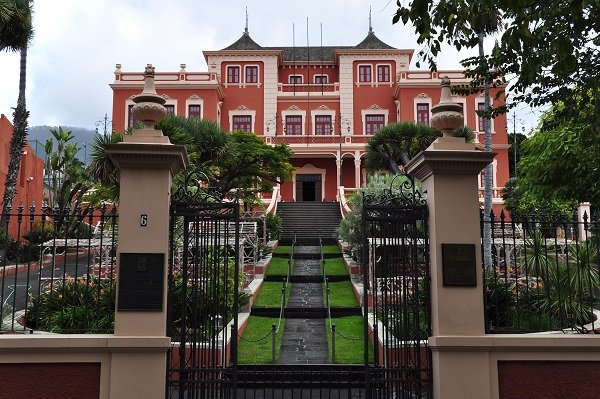
Why it’s a «Hidden Gem»: While many tourists just take a photo of the facade, you can actually walk through the gardens and sit on its grand terrace.
The Experience: It is one of the best spots in town to enjoy a café solo or a glass of local wine while overlooking the valley. The interior features grand ballrooms and a classic wooden staircase that feels like stepping back into the 19th century.
Pro Tip: If you are looking for a quiet, sophisticated place for lunch away from the main tourist trail, their restaurant offers traditional Canarian dishes at very reasonable prices given the stunning surroundings.
Church of La Concepcion
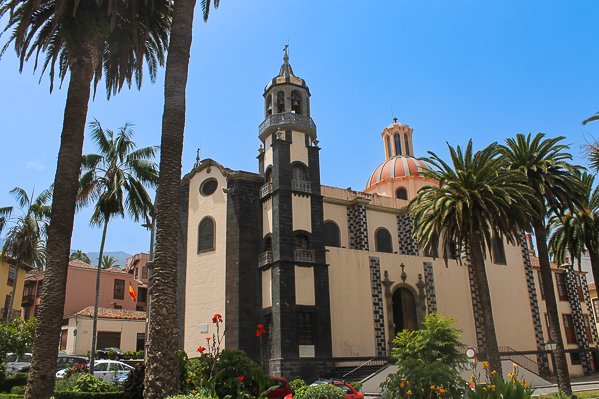
Known as the «Cathedral of the North,» its red-domed roof is a landmark you can see from miles away. Inside, it houses some of the most important religious art in the archipelago.
🍽️ The Gastronomy of the Valley: A Sensory Journey
Beyond its architecture, La Orotava is a feast for the senses; as you walk the historic streets, you’ll often catch the distinct, toasted aroma of traditional Gofio mills still in operation today. For a true taste of the region, stop by a local confitería to sample Rosquetes or Truchas (sweet potato-filled pastries), and be sure to pair them—or a hearty local meal—with a glass of Listan Blanco. This white wine, grown in the Orotava Valley using the unique «braided cord» method, is crisp, volcanic, and unlike anything else you’ll find in the Atlantic.
📅 The Best Time to Visit: The Corpus Christi Carpets
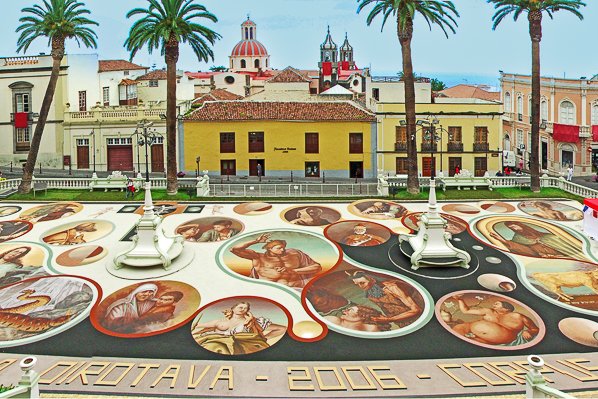
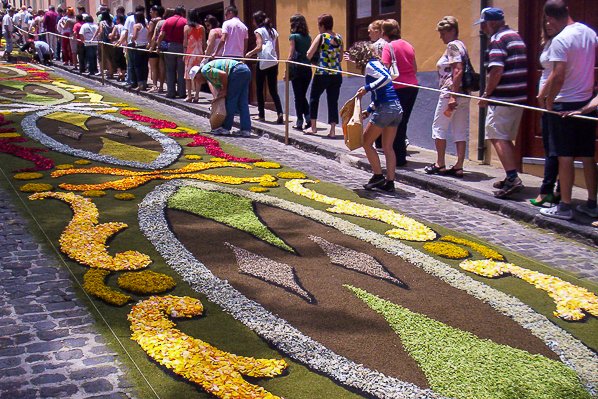
If you are lucky enough to visit in June, you will witness one of the most spectacular events in Spain. The streets are covered in gigantic, intricate carpets made entirely of volcanic sand from Mount Teide and fresh flower petals. It is a sight that has to be seen to be believed.
🌟 Plan Your Perfect Escape to La Orotava
La Orotava is just one of the many «Hidden Gems» waiting to be discovered beyond the main tourist resorts. Whether you want to immerse yourself in its 17th-century history or simply enjoy a glass of volcanic wine overlooking the valley, this historic town is a highlight of any Tenerife trip. To help you make it happen, we’ve selected the best ways to experience the town, from charming local stays to the most highly-rated guided tours.
📍 Location & How to Get There
Whether you are staying in the sunny South or the lush North, La Orotava is highly accessible. However, because it is a historic town with steep, narrow streets, a little planning goes a long way.
By Car: The Scenic Route
From the South (Costa Adeje/Las Americas): It is a straightforward 60-minute drive via the TF-1 and then the TF-5 motorway. The drive is spectacular as you transition from the dry, volcanic south to the emerald-green valley of the north.
From the North Airport (TFN): La Orotava is practically on the doorstep of the North Airport. It is a quick 20-minute drive via the TF-5.
Parking Tip: Avoid driving into the very heart of the historic centre—the one-way streets are notoriously tight. We strongly recommend parking in the underground car park at Plaza de la Constitucion (often called Plaza del Ayuntamiento). It is spacious, secure, and puts you exactly where the walking route begins.
By Bus (Guagua): Stress-Free Travel
The green «TITSA» buses are reliable and affordable (https://titsa.com/index.php/en)
From Puerto de la Cruz: Lines 345 and 352 run frequently throughout the day. It’s a short 15-minute hop that drops you right in the centre.
From the North Airport (TFN): Take the Line 30 towards Puerto de la Cruz and then change, or check for direct connections via Line 108 which connects Santa Cruz to Icod, stopping near La Orotava.
Pro Tip: Use a «Ten+ Card» or pay with your contactless bank card for the best rates on all island buses.
❓ La Orotava: Essential FAQs
Absolutely. While the drive is about an hour, the contrast between the sunny South and the historic, green North is one of the best experiences in Tenerife. It offers a sophisticated atmosphere, world-class architecture, and a much more «authentic» Canarian feel than the main resort towns.
To see the main highlights—the House of the Balconies, the Victoria Gardens, and the historic churches—you will need at least 3 to 4 hours. However, many visitors prefer to spend a full day to enjoy a leisurely lunch in a traditional Guachinche or on the terrace of the Liceo Taoro.
The easiest way is a 10-minute taxi or a 15-minute bus ride (Lines 345 or 352). If you are feeling active, it is technically walkable, but be warned: it is a very steep uphill climb all the way from the coast!
While there isn’t a strict «suit and tie» code, Tenerife’s historic churches (like La Concepcion) are active places of worship. It is respectful to ensure your shoulders are covered and to avoid wearing swimwear inside. Also, keep in mind that the North is often 3-5°C cooler than the South, so bringing a light jacket or jumper is highly recommended.
The spectacular carpets are created for the Corpus Christi celebrations, which take place in June (the exact date changes each year). If you aren’t visiting in June, you can still see photos and learn about the process in the local museum.